Breaking Down The Complexity Of Color Wheel Spin For Artists And Designers
Understanding how a color wheel rotates—and why each degree matters—offers designers a systematic shortcut to harmonious palettes, faster iteration, and clearer communication with clients. By demystifying the geometry behind complementary, triadic, and analogous schemes, creators can replace guesswork with repeatable logic while still preserving creative freedom.
Why the Spin Matters in Modern Design
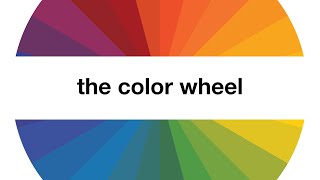
The color wheel is more than a static chart; it is a 360‑degree representation of hue relationships. When a designer “spins” the wheel, each angular move translates to a specific visual effect—contrast, balance, or tension. In an era where brand guidelines demand consistency across digital, print, and environmental media, mastering these angular increments streamlines the approval process and reduces the need for costly revisions.
Core Mechanics of Wheel Rotation
Three foundational rotations dominate most professional workflows:
- Complementary (180°): Directly opposite hues deliver maximal contrast, ideal for call‑to‑action buttons or accent walls.
- Triadic (120°): Equidistant points create vibrant yet balanced schemes, common in editorial spreads and UI themes.
- Analogous (30°–60°): Adjacent colors produce subtle cohesion, useful for background gradients and product packaging.
Beyond these, designers often employ split‑complementary (150° and 210°) or double‑triadic (60° intervals) rotations to inject nuance without sacrificing harmony.
Applying the Spin to Real Projects
Consider a mobile app redesign for a health tracker. Starting with a base hue of teal (#008080), a 180° spin yields a coral accent (#FF7F50) that draws immediate attention to key metrics. Adding a 30° analogous step on either side introduces muted teal‑green and teal‑blue shades, ensuring the interface feels cohesive while still guiding the eye.
In print, a fashion brochure might begin with a deep indigo. A 120° triadic spin introduces burnt orange and mustard yellow, delivering a bold, runway‑inspired palette that stands out on glossy stock.
Implications for Workflow Efficiency
By encoding spin calculations into design tools—such as Adobe Color’s “rotate” feature or CSS custom properties—teams can generate multiple palette variations with a single click. This reduces the time spent manually adjusting hue values and eliminates subjective bias in early concept stages. Moreover, documenting the exact degree of rotation in style guides ensures that downstream developers replicate colors precisely, regardless of software version.
Practical Tips for Mastering Wheel Spin
- Start with a neutral base (gray, black, or white) to evaluate contrast before adding hue rotations.
- Use a digital wheel that displays numeric degrees; verify the angle after each adjustment.
- Test palettes under different lighting conditions—screen, daylight, and print—to confirm that the intended relationships hold.
- Record the rotation angle alongside hex codes in your design system for future reference.
- When in doubt, revert to the 30°–60° analogous range for safe, low‑risk combinations.
Future Directions: Data‑Driven Color Spin
Emerging AI tools can analyze brand sentiment and automatically suggest optimal spin angles based on audience demographics. While such automation promises speed, the underlying geometric principles remain unchanged; designers who internalize the spin logic will be better positioned to critique algorithmic suggestions and tailor them to nuanced project goals.
In short, breaking down the complexity of color wheel spin equips artists and designers with a repeatable, mathematically grounded language for color decisions—transforming an often‑intuitive process into a reliable component of any creative workflow.
18 Next-Level Recipes To Sharpen Your Kitchen Skills

18 Next-Level Recipes To Sharpen Your Kitchen Skills
Image Gallery: Breaking Down The Complexity Of Color Wheel Spin For Artists And Designers






Frequently Asked Questions (FAQ)
Q: Breaking Down The Complexity Of Color Wheel Spin For Artists And Designersの最新情報や概要はどうなっていますか?
A: 当サイトでは、Breaking Down The Complexity Of Color Wheel Spin For Artists And Designersに関する信頼性の高いデータや最新情報を集約し、わかりやすくお届けしています。
Q: Breaking Down The Complexity Of Color Wheel Spin For Artists And Designersが注目されている理由は何ですか?
A: 最近の動向や関連メディアの更新に伴い、Breaking Down The Complexity Of Color Wheel Spin For Artists And Designersに対する関心が急速に高まっています。
Q: Breaking Down The Complexity Of Color Wheel Spin For Artists And Designersの関連データや詳細情報はどこで確認できますか?
A: 本ページ内の各セクションや関連トピック一覧から、より詳しい情報を確認いただけます。
